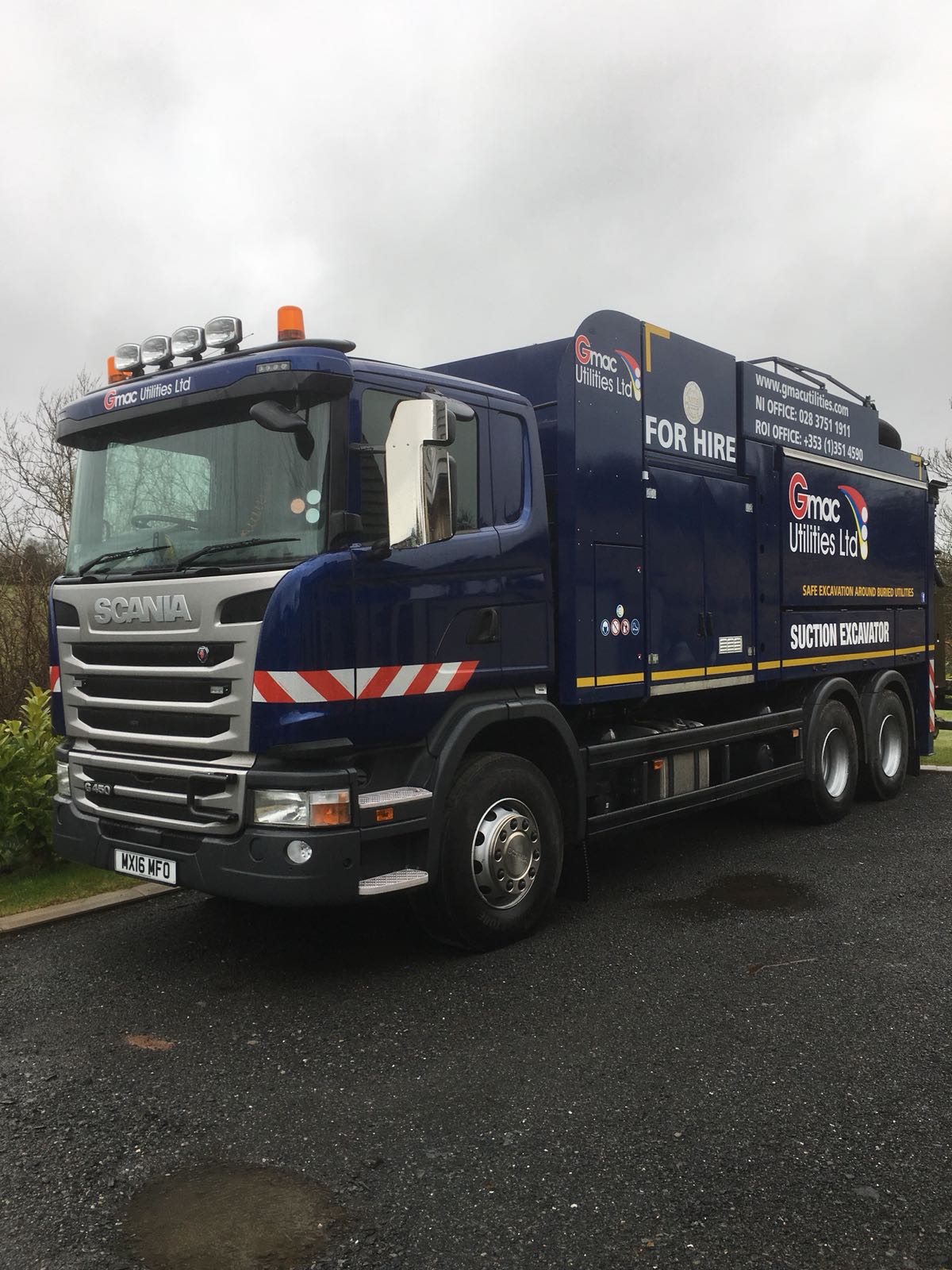
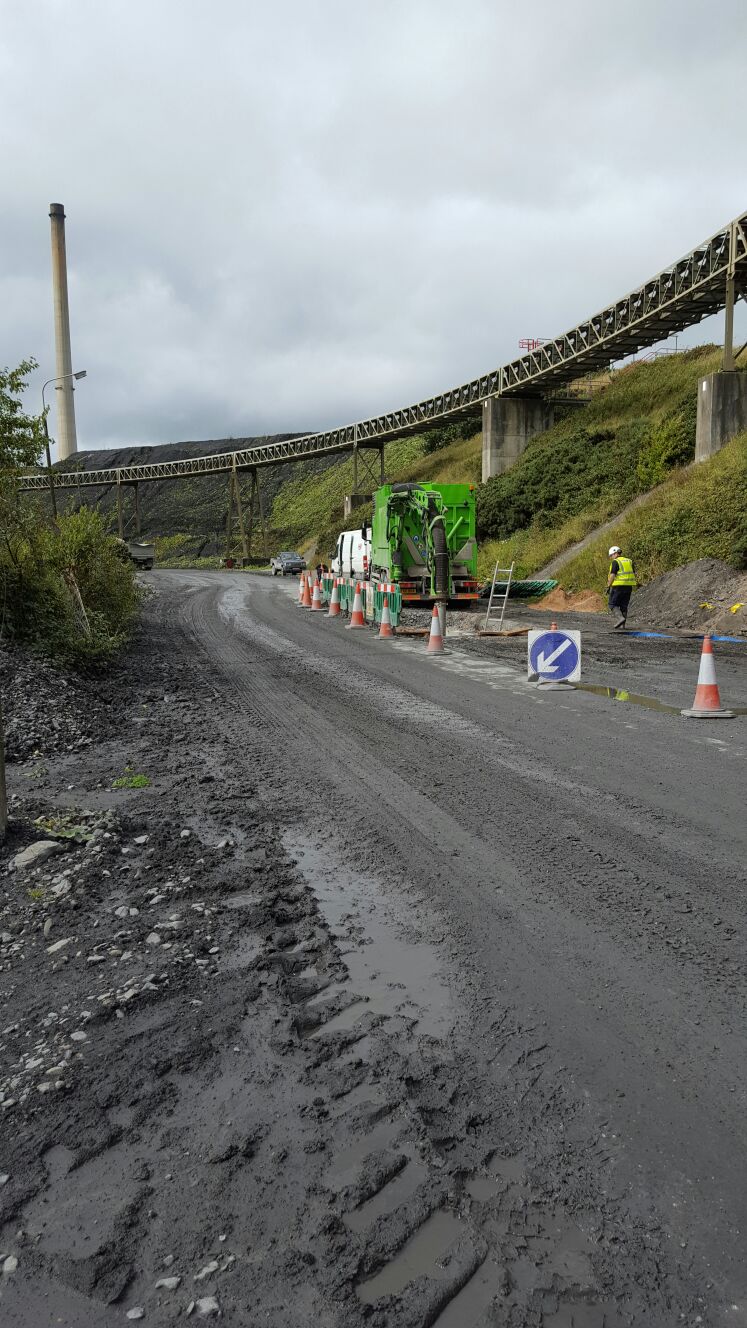
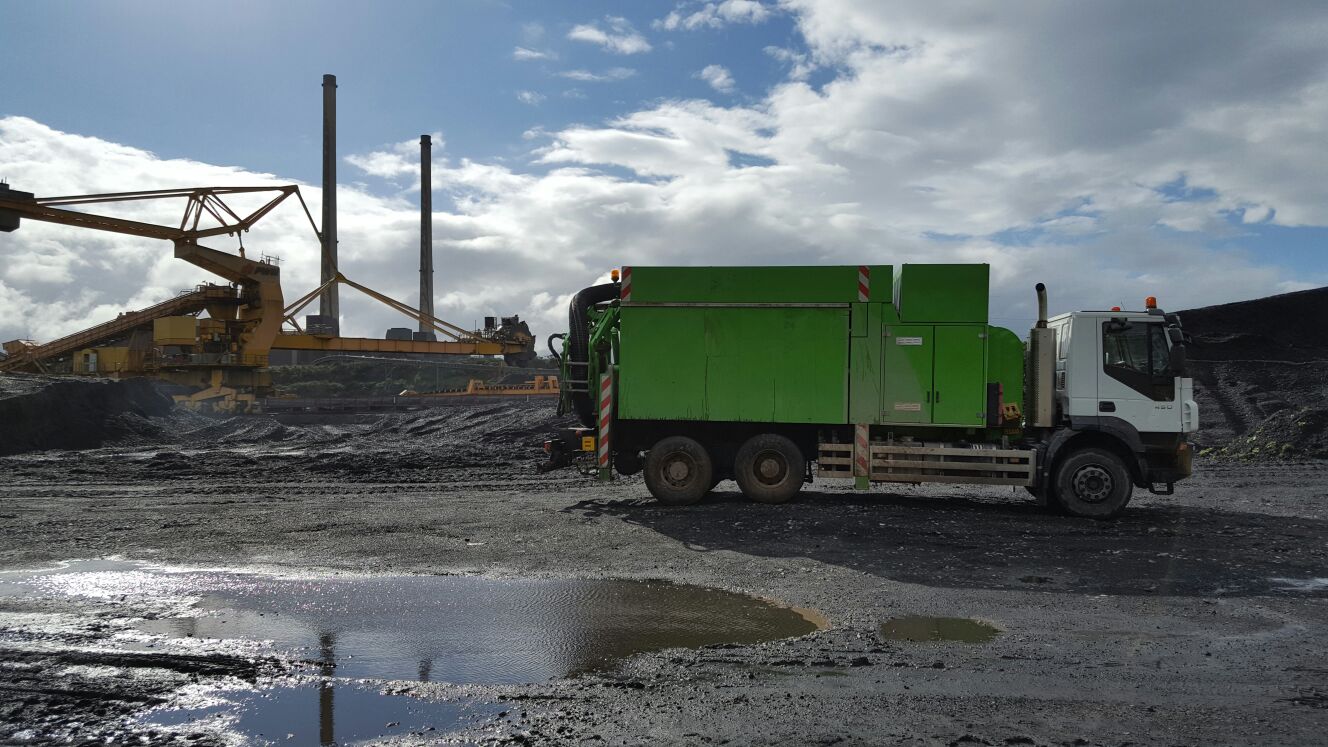
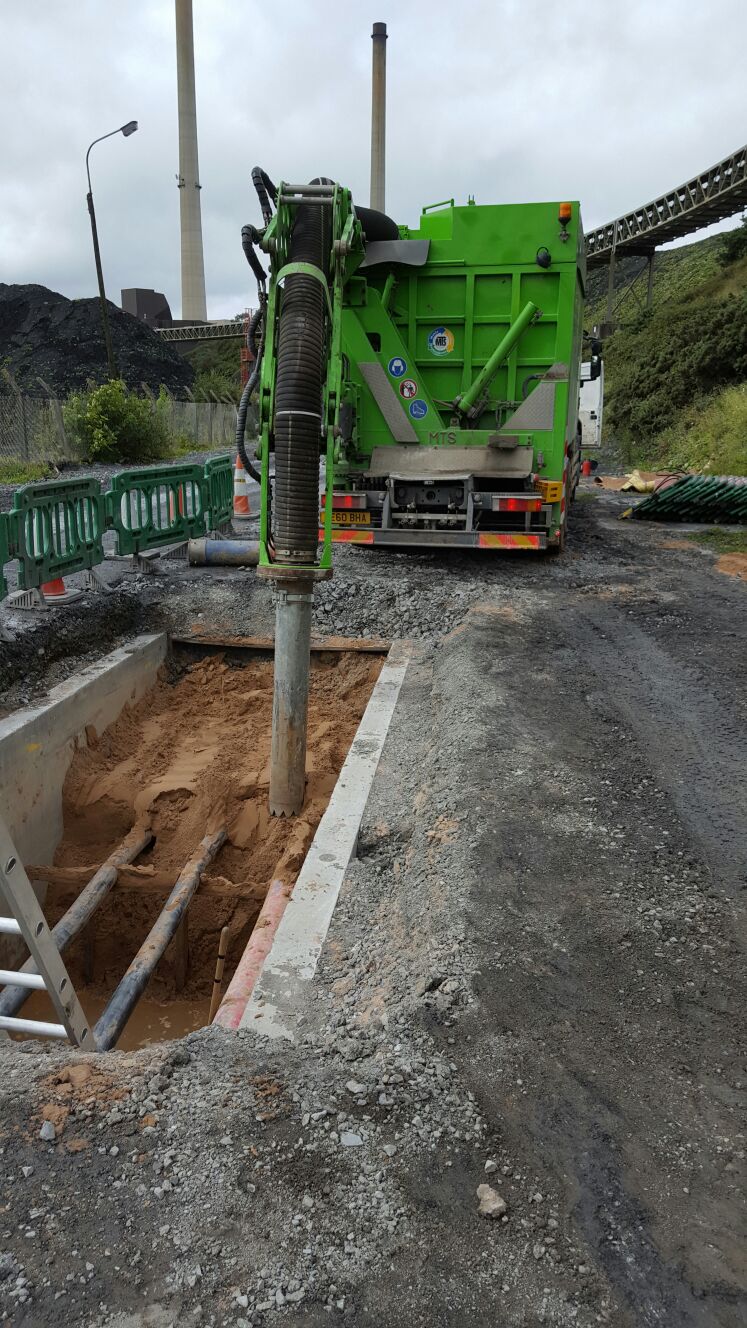
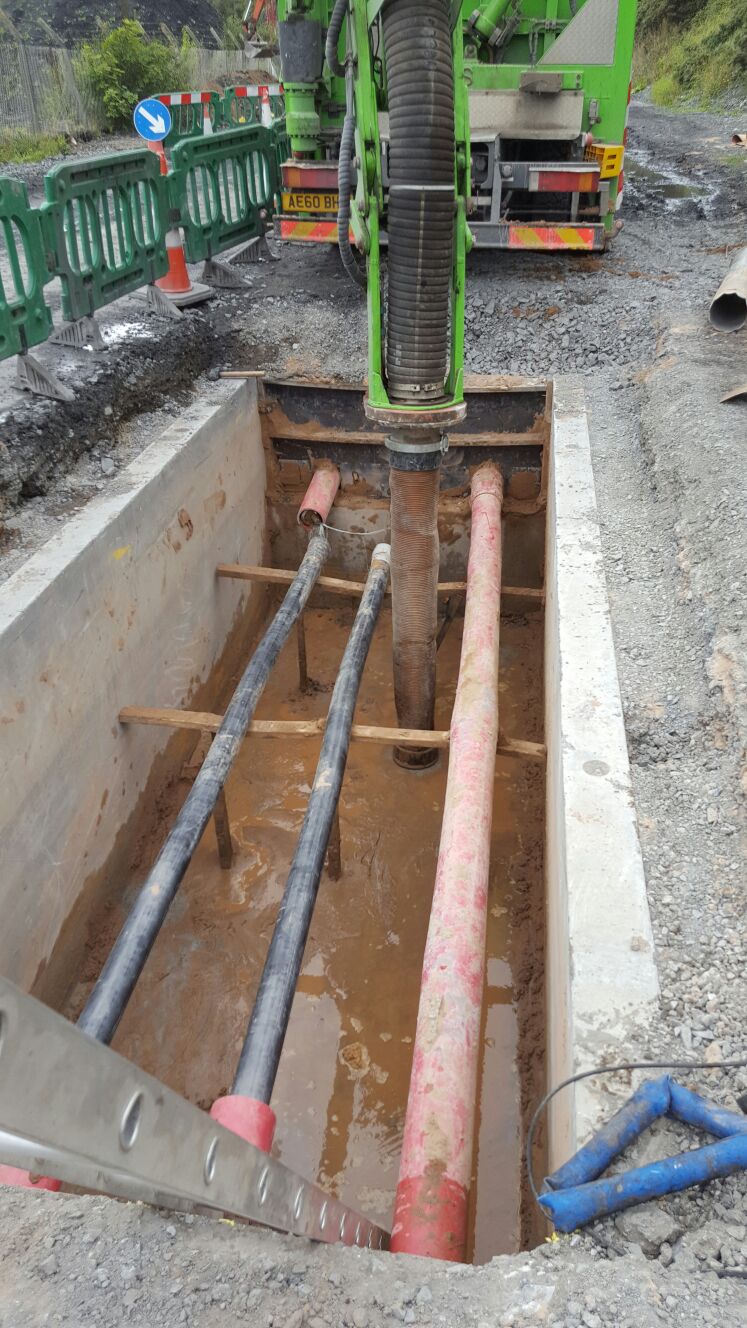
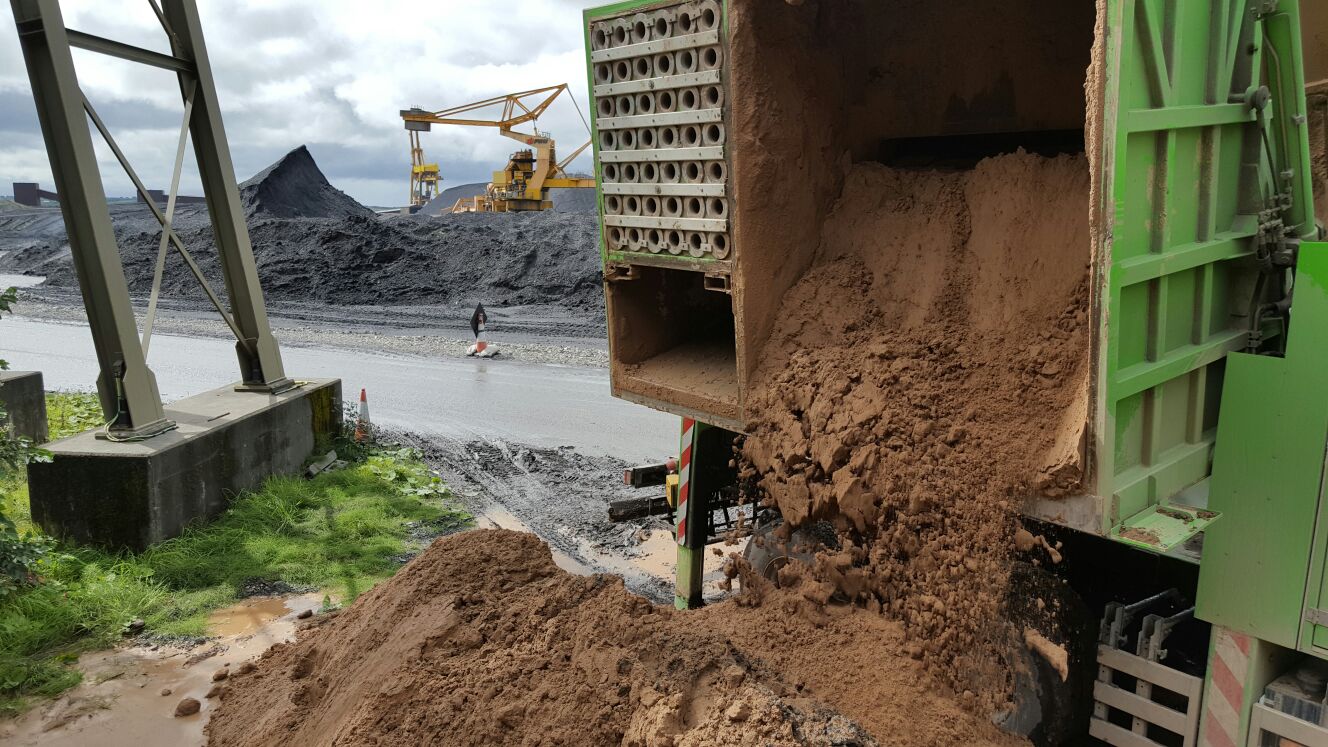
Possible vacuum excavation applications include:
- Safe excavation around buried utilities
- Excavation works in restricted conditions
- Trial holes and inspection pits
- Railway line ballast removal
- Construction Projects
- Working in vicinity of tree roots
- Culvertgully clearing
- Sewer slit removal
- Airport apron utility excavations (excavated material contained in vehicle and not at side of trench)
Advantages of Vacuum Excavation:
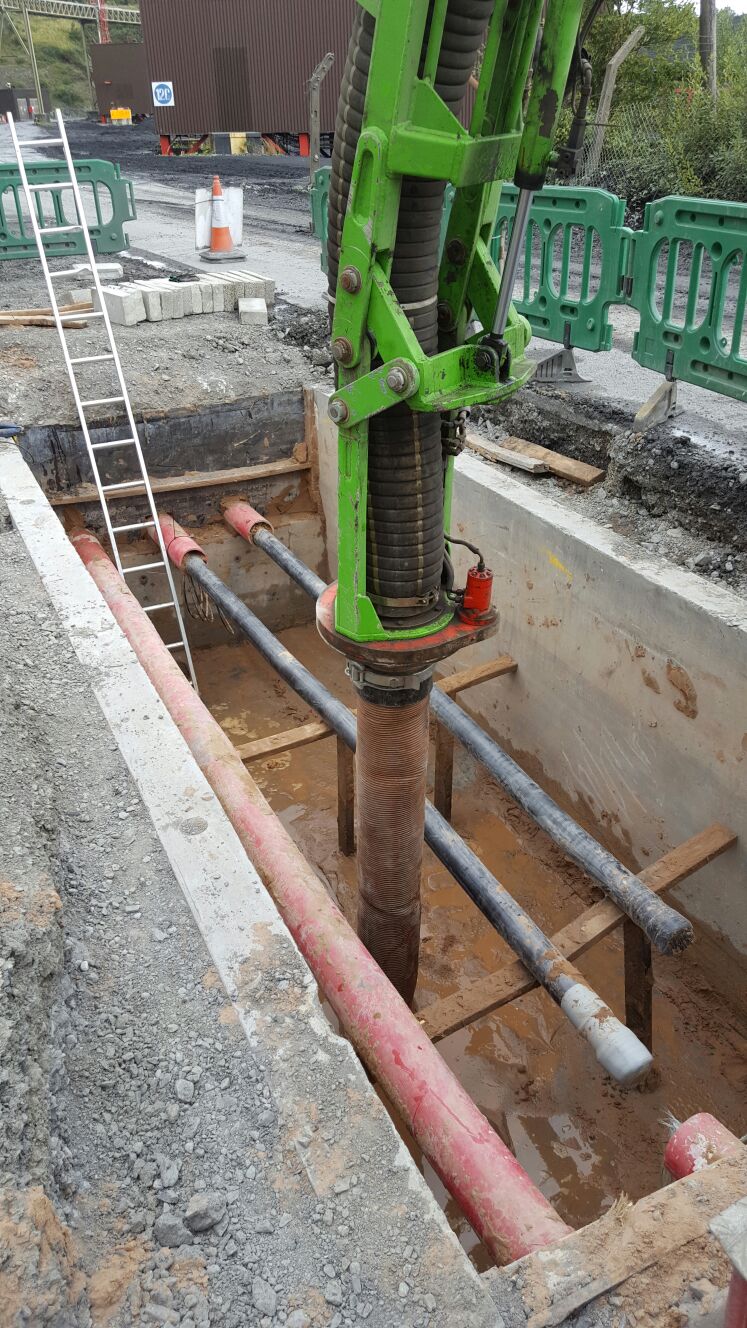
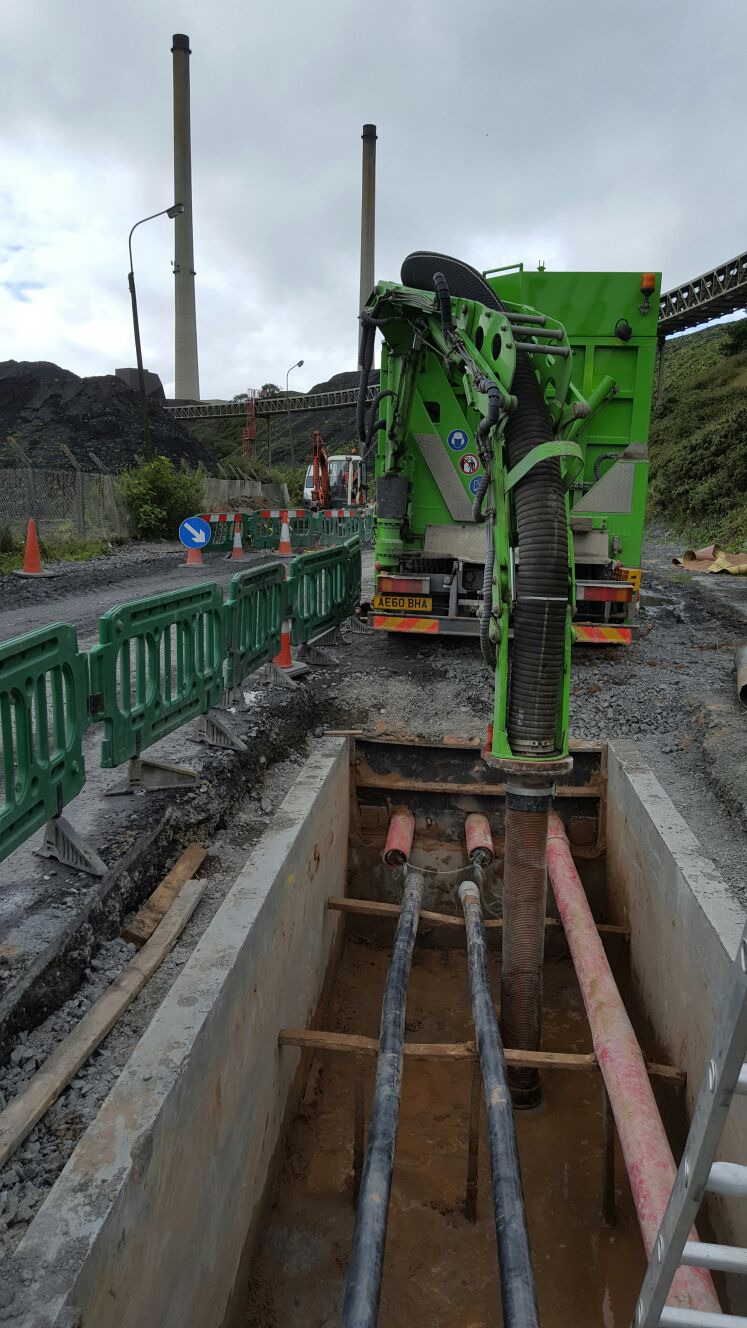
- This is the safest method of excavation around power cables and other utilities without the risk of damage to the utility or danger of injury to the operator.
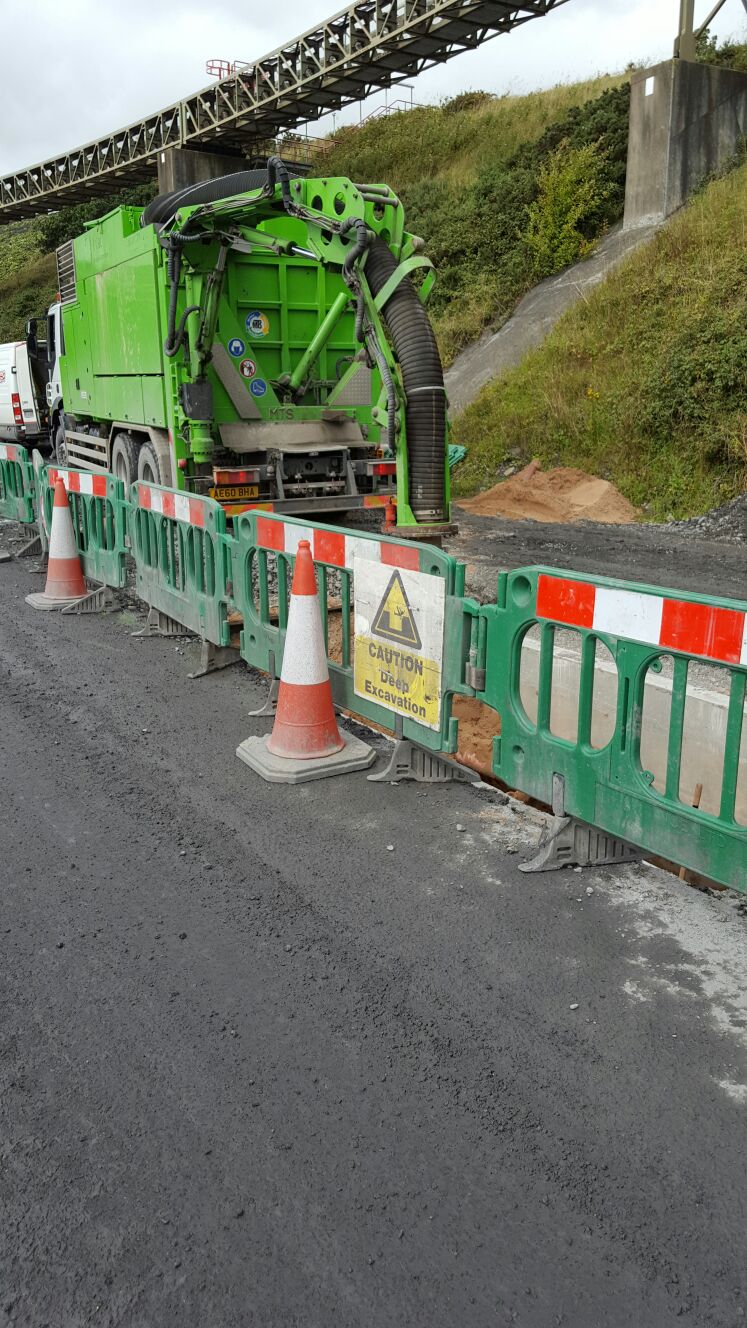
- The excavated material is contained in the vehicle rather than deposited on the side of the trench which is important in confined spaces.
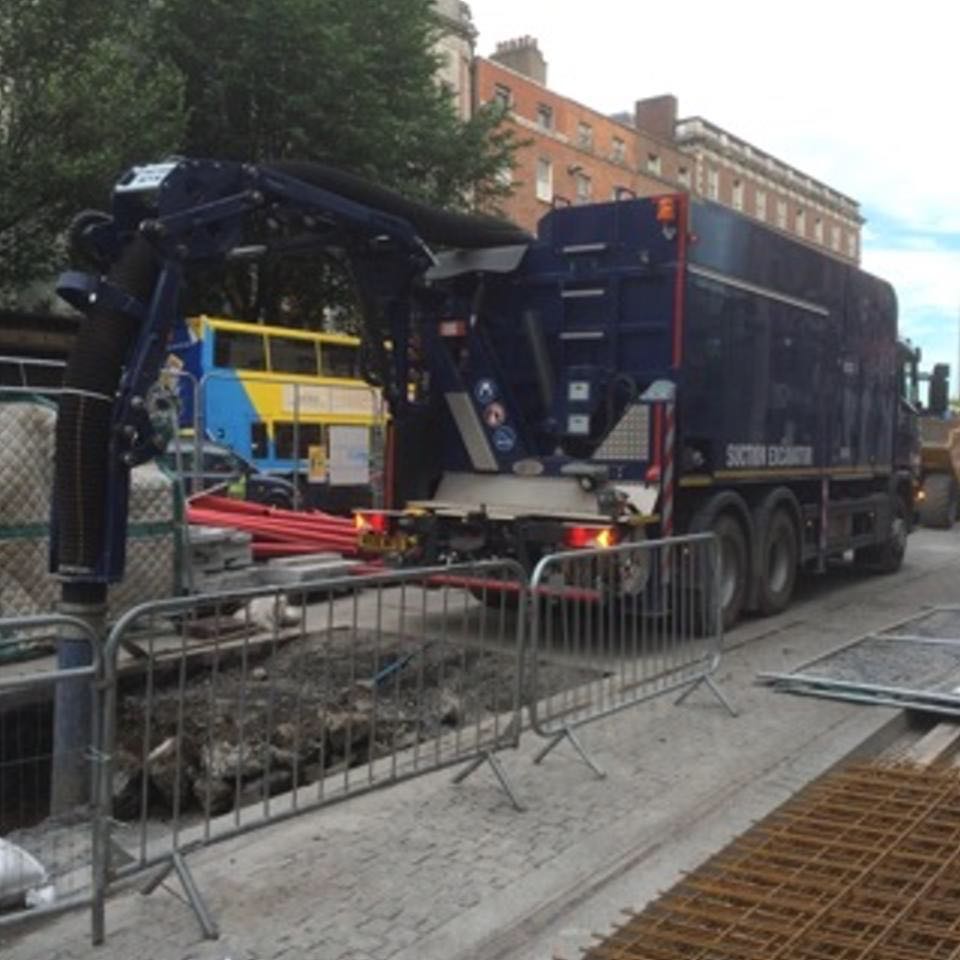
- This method of excavation has been used extensively on the Dublin City Light Rail Service Diversions Project and is a safety requirement by many UK Utility Companies.
- The excavation process can be finely controlled and the size of the excavation and the volume of material removed are therefore minimised. As less spoils is excavated this results in reduced reinstatement costs and reduced environmental impact.
- The speed and flexibility of the excavator is ideal for works in high-profile locations and for works in the vicinity of sensitive structures. Urban sites are often complicated by restricted and difficult access. The excavator’s telescopic reach and flexibility means it can be effective in many areas where mechanically assisted excavation is compromised.
- As the excavation is far less labour intensive there is a significant reduction to many health and safety risks. Many utility companies and airport operators throughout Ireland and the United Kingdom now insist on the use of vacuum excavation rather than invasive methods. This is due to the minimised disruption, reduced reinstatement requirements and improved safety that vacuum excavation offers.
Gmac Utilities are leading the way in making excavation safe, efficient, less costly and protective of the buried infrastructure.
Vacuum excavators are designed and manufactured using special suction fans that create the negative pressure and air flow to transport material. The suction fans are driven via an engine driven power and are capable of creating an airflow of up to 44,000m³ per hour.
This air flow enables the operator to vacuum liquids or solids up to 250 mm in diameter through the air intake suction nozzle.
The excavated material is deposited directly into the main collection chamber on board the vehicle due to the drop in air pressure and circulation. The air is then deflected through the air outlet chambers to clean, dry and remove the finer particles. The fine filter system separates the finest dust from the airflow before the clean air travels through the fan assembly. The purified air then travels through a special air outlet silencer before returning to the atmosphere. The main collection chamber is then discharged, normally into low level skips for recycling.
Possible applications include:
- Safe excavation around buried utilities
- Excavation works in restricted conditions
- Trial holes and inspection pits
- Railway line ballast removal
- Construction Projects
- Working in vicinity of tree roots
- Culvertgully clearing
- Sewer slit removal
- Airport apron utility excavations (excavated material contained in vehicle and not at side of trench)